How to Declutter Your Desk in 30 Minutes
A timed sequence for a clear desk today: lift everything into one box, wipe the surface, put back only the daily essentials, then sort the box into four destinations.
At a glance
What you need
- One box, basket or large tote
- Damp cloth and dry cloth
- Trash bag and recycling bag
- Timer or clock
- Inbox tray or shallow box
You do not need a free weekend to get a clear work surface. You need one empty box, a cloth and about half an hour. The trick is to stop deciding where each thing goes while it is still on the desk.
The fastest way to declutter your desk is to take everything off first, put back only what you use every day, and then sort what is left from the box. The surface is clear within the first ten minutes, and the rest of the time goes on the box, not the desk.
What to gather
- One box, laundry basket or large tote
- A cloth, slightly damp, and a dry one
- A trash bag and a recycling bag
- A timer or a clock you can see
- An inbox tray, or any shallow box that can act as one
The 30-minute sequence
These timings are rough guides for an ordinary desk. A desk buried deep in paper will take longer at the sorting stage, so see the last section for what to do then.
| Roughly | What you do | Result |
|---|---|---|
| Minutes 0 to 5 | Move everything off the surface into the box | Empty desk |
| Minutes 5 to 8 | Wipe the surface | Clean desk |
| Minutes 8 to 12 | Put back the daily essentials | Working desk |
| Minutes 12 to 28 | Sort the box | Empty box |
| Minutes 28 to 30 | Take out the trash, recycling and dishes | Finished |
Step 1: Take everything off the surface
- Put the box on your chair or on the floor beside the desk.
- Leave the computer, monitor and lamp where they are. Everything else comes off.
- Work from one end of the desk to the other, lifting each item into the box without stopping to judge it.
- Stack paper loosely together at one side of the box so it does not get crumpled under heavier things.
- Carry mugs, glasses and plates straight to the door, ready for the kitchen.
Do not sort yet. The moment you pause to read a letter or test a pen, the five minutes become twenty. If the desk has more than one box can hold, use a second box and keep going.
Step 2: Wipe the desk
With the surface bare, wipe it from back to front with the damp cloth, then dry it. Lift the keyboard and mouse and wipe underneath. Dust the base of the monitor and the lamp with the dry cloth, keeping moisture away from equipment and plugs.
Step 3: Put back only the daily essentials
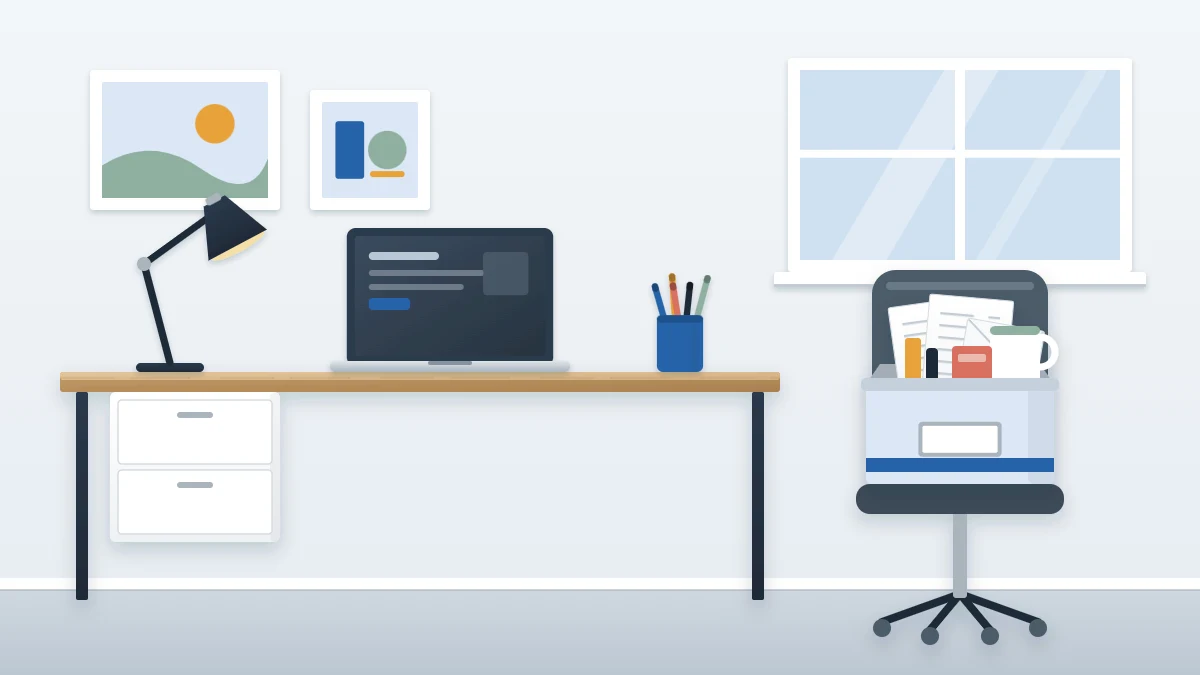
Return a short, fixed set of things, each to a definite position:
- Computer, keyboard and mouse in the center.
- Lamp at the back corner, on the side opposite your writing hand so it does not cast a shadow across the page.
- One pen cup holding a handful of pens that work, a pencil and a highlighter. Fish these out of the box now.
- One tray for paper that needs action, at the edge of the desk.
- The current notebook, closed, beside the keyboard.
That is the whole list for most desks. If you want to add things later, such as a riser, a catch-all dish or a vertical file, choose from these desk organization ideas one at a time, once you have worked at the clear desk for a few days and know what you actually miss.
What earns a place on the surface
A simple test settles most arguments: does your hand reach for it on most days you sit here?
- Stays on the desk: things used daily, plus the lamp.
- Goes in a drawer or within one step: things used weekly, such as the stapler, scissors, tape and spare notepads.
- Goes to a shelf or supply spot: things used monthly or less, including refills, envelopes, reference books and the hole punch.
- Leaves the room: dishes, mail for other people, toys, tools, anything that came in on its way to somewhere else.
Step 4: Sort the box
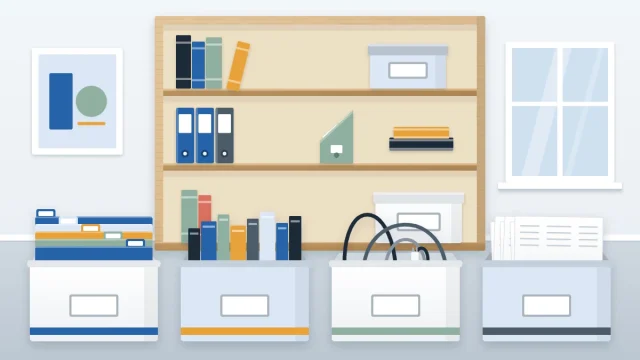
Now work through the box with the trash and recycling bags open beside you. Pick up one item at a time and send it to one of four places. Handle each thing once.
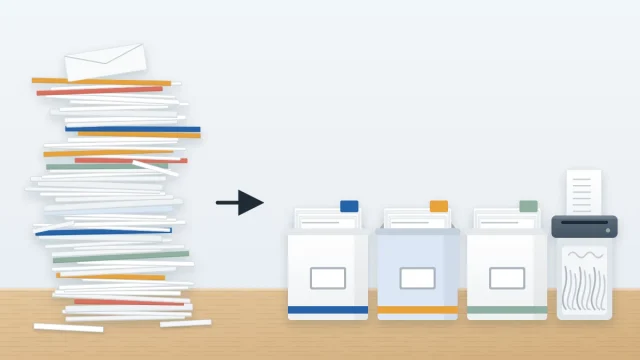
- Trash and recycling. Dead pens, used sticky notes, wrappers, empty envelopes, old packaging. Set aside anything showing personal details to shred before it is recycled.
- Things that live elsewhere. Make one pile by the door for other rooms and deliver it in a single trip at the end.
- Supplies to the supply spot. Extra pens, clips, pads, tape and chargers go to the drawer, shelf or box where the household keeps them, not back onto the desk.
- Paper to the inbox tray. Every loose sheet that is not obvious recycling goes into the tray in one stack. Do not read or file it now.
Tip
If an item fits none of the four, it probably has no home yet. Put it in the top drawer for today and write it on a sticky note. Deciding where it lives is a five-minute job for another day, not a reason to leave it on the desk.
The tray will be fuller than you would like. That is fine. All the paper is now in one known place instead of spread across the surface, and it can be sorted in its own session.
Step 5: Finish and check
- Take the trash, recycling and dishes out of the room.
- Deliver the pile by the door.
- Put the empty box away.
- Sit down and check that everything you need for tomorrow is within reach and nothing else is.
To keep the surface this way, a short end-of-day habit of putting things back does most of the work. It is set out in the routine to keep a home office organized.
If your desk does not fit the plan
- Too much for half an hour: do Steps 1 to 3 today, so you have a working desk. Close the box, write the date on it and sort it in sessions of about fifteen minutes over the next few days.
- No drawers: use a second box or a tote on a nearby shelf as the home for weekly items.
- The mess is the whole room: a clear desk is the right first win. After that, work through the rest with the zone-by-zone plan for home office decluttering.
Frequently asked questions
What should stay on a desk?
Only what your hand reaches for on most days: the computer, keyboard and mouse, a lamp, one pen cup with working pens, one tray for paper that needs action and the notebook currently in use. Weekly items go in a drawer or within one step, and the rest goes to a shelf.
What if I cannot finish sorting the box in half an hour?
Stop after the essentials are back on the desk, so you have a usable surface. Close the box, write the date on it and work through it in short sessions over the next few days. Avoid tipping it back onto the desk to finish later.
What do I do with all the loose paper from the desk?
Recycle the obvious discards, set aside anything showing personal details for shredding, and put every other sheet into one inbox tray in a single stack. Do not read or file during the desk clear-out. Sort the tray later in a separate paper session.