Desk Organization
How to Organize a Desk Without Drawers
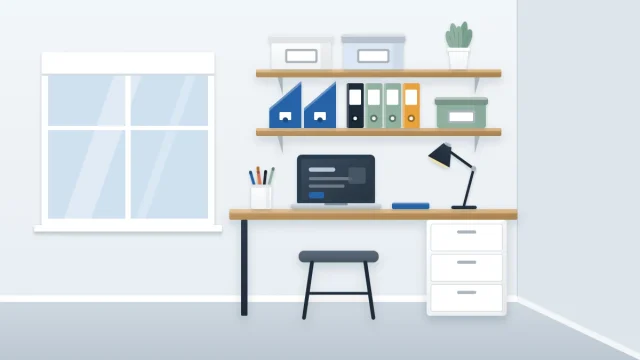
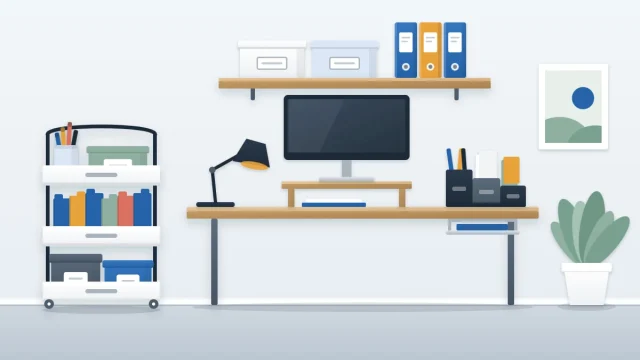
Replace missing drawers with storage beside, above and under a plain table: a cart or drawer unit, a compact desktop organizer, an under-desk tray and lidded boxes within one step.
Simple Ideas for a Better Organized Workspace
Practical, step-by-step ideas for organizing the physical side of a home office: the desk, the paperwork, the supplies and the cables.
New to organizing a home office? Work through these guides in order before you move a single drawer.
A practical order of first jobs for a messy or newly set-up home office: observe the room, clear the desk, give each category one home, store by use, then handle paper and cords.
Twelve practical ways to get things off your desk, from a monitor riser and a single paper tray to an under-desk hook and a rolling cart, with what each one solves and what it needs.
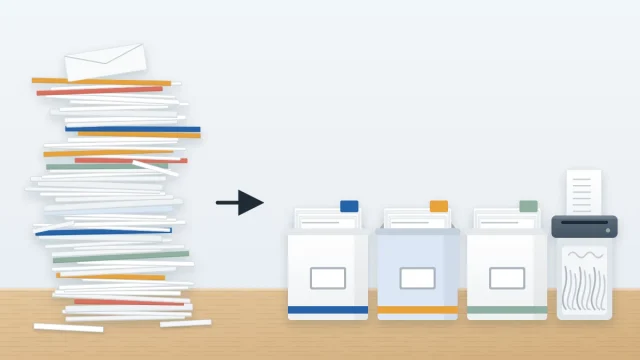
Sort any mixed pile of household and work paper into four piles (act on, file, recycle, shred), group what you keep into broad categories and give active papers one visible tray.
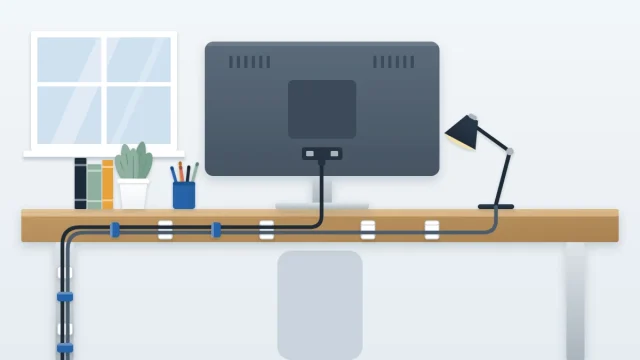
A safe, step-by-step way to tidy the cords behind and under a desk: identify each one, remove extras, bundle loosely, guide the run along the desk and leave slack.
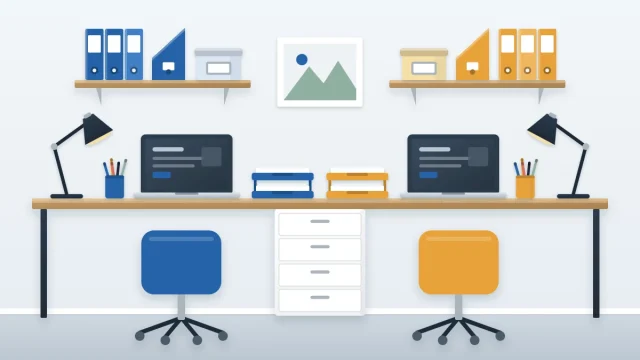
Clear desktops, drawers with a place for everything and a layout that keeps daily items within reach.
Replace missing drawers with storage beside, above and under a plain table: a cart or drawer unit, a compact desktop organizer, an under-desk tray and lidded boxes within one step.
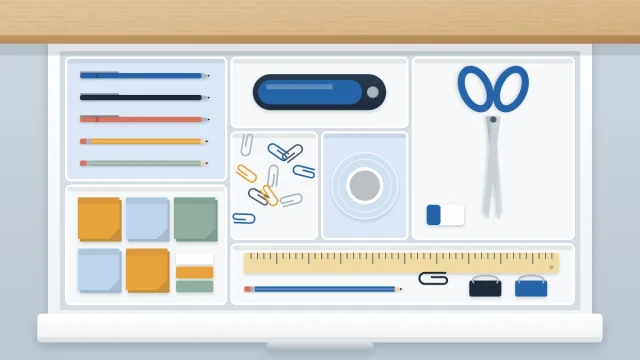
Empty, sort, measure and divide: a step-by-step way to turn jumbled desk drawers into fixed compartments, with a job for each drawer and a strict limit for the odds and ends.
Twelve practical ways to get things off your desk, from a monitor riser and a single paper tray to an under-desk hook and a rolling cart, with what each one solves and what it needs.
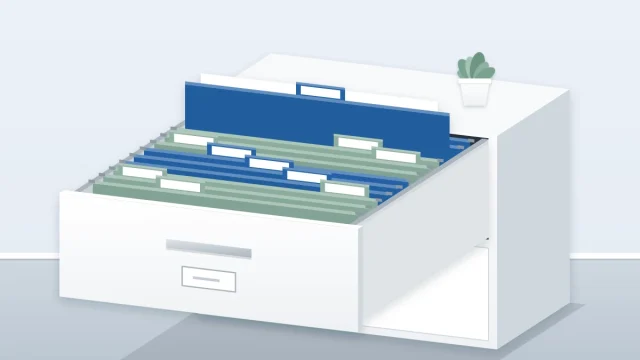
Simple filing systems for incoming mail, household paperwork, notebooks and the documents you need to keep.
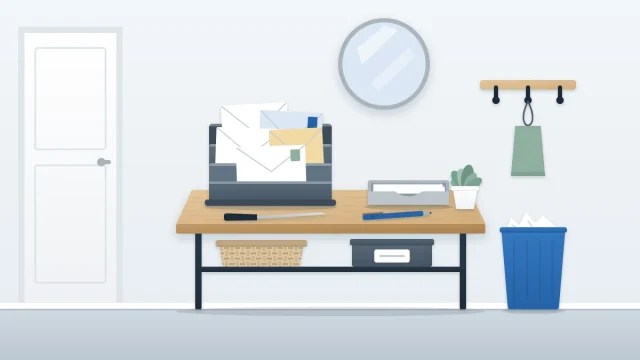
Give mail and loose paper one landing spot: an inbox tray, two or three labeled slots, a recycling bin and a shredding container within reach, plus a two-minute routine for opening it all.
Gather every notebook, sort them into in use, finished and blank, keep one current notebook per purpose at the desk and store the rest upright, dated and labeled so any of them can be found later.
Eight compact ways to store paper without a filing cabinet, compared by what each holds, the space it needs and what it suits, plus how to keep blank printer paper flat and dry.
Build a physical filing setup that is quick to file into and quick to search: match the container to your volume, use broad categories with a few subfolders, label consistently and keep an index card.
Where to keep pens, stationery, printer paper and spare supplies so you can find them and see what is running low.
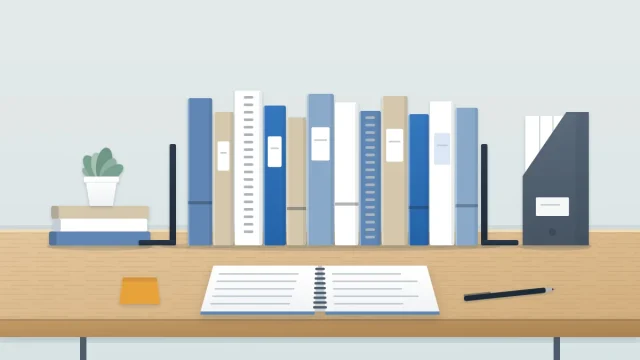
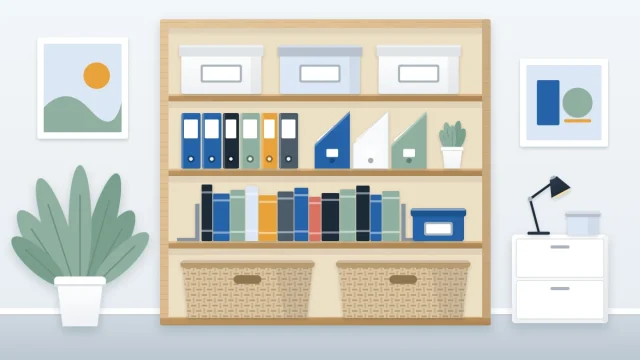
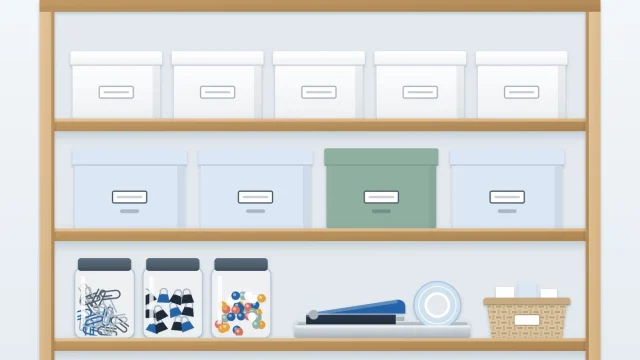
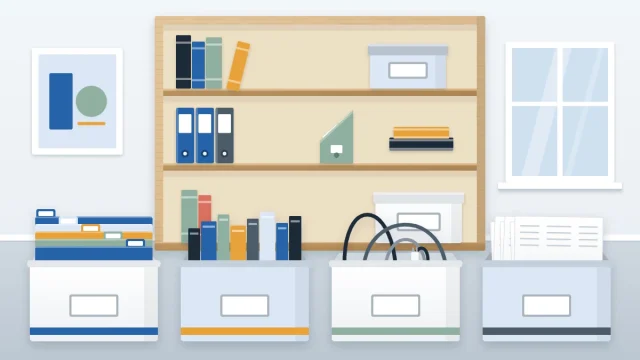
Sort a crowded bookcase one shelf at a time, then give each shelf a job based on how easily you reach it: weekly items in the middle, light boxes up high, heavy things low.
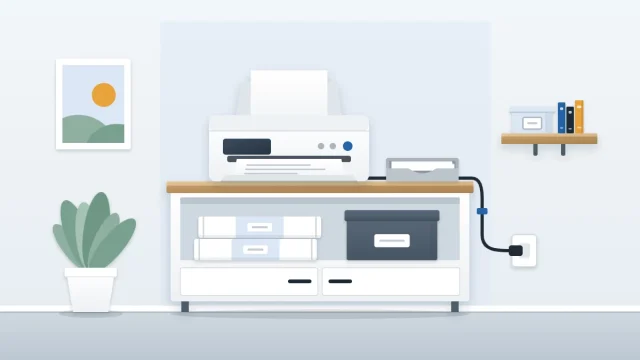
Give the printer a stable surface with the clearance its manual asks for, then store paper flat below it, spare ink in one box, and add a tray for printouts and a folder for scrap.
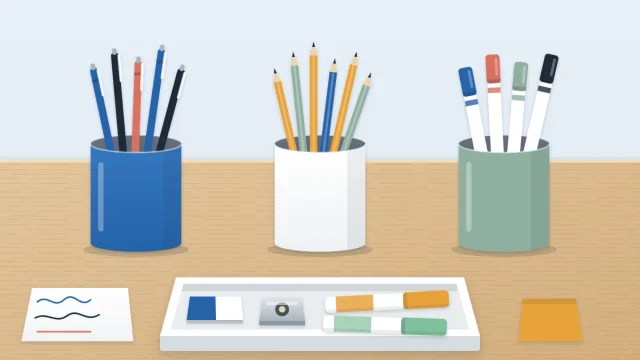
Collect every pen, pencil and marker, test each on scrap paper, discard the dead ones and split the rest into a small working set for the desk and a backup box stored with your supplies.
Ten ways to store pens, clips, tape, envelopes and refills, from one supply home for the household to a refill box for backups, with a table matching each supply to its container.
Ideas for corners, closets, shared rooms and other tight workspaces where every shelf and surface has to count.
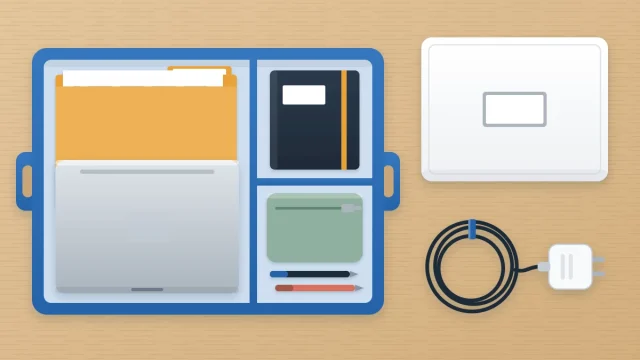
Build a kit for working at the kitchen or dining table: one container sized to your laptop, pouches for small items, one notebook, one folder and a fixed packing order.
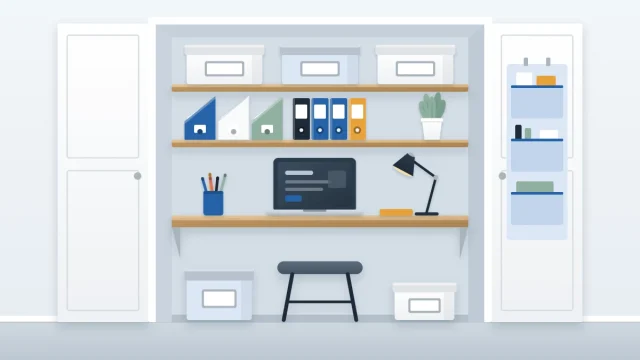
Seven steps to arrange a reach-in closet as an office nook: measure, set the desk height and depth, plan shelves within reach, use the side walls and keep the doors able to close.
How two people can share one office or one desk: a surface and a drawer each, shared supplies in one agreed place, a color per person and separate inbox trays.
Seven principles for a corner, alcove or tiny room: set a limit, keep stock elsewhere, use the wall and the door, choose closed storage and keep the floor clear.
Tidy routes, labels and storage for the cords and chargers on, under and around your desk.
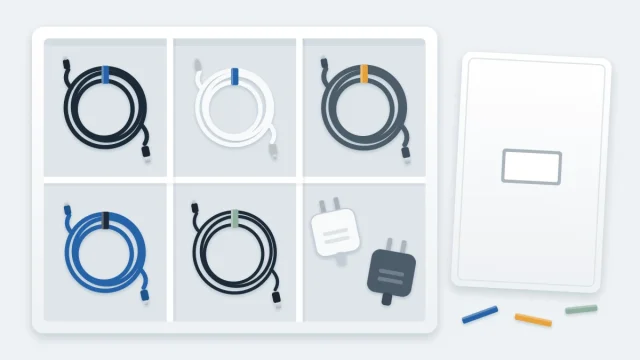
Sort the box of mystery cables: match each one to a device you still own, recycle the damaged ones, coil the rest loosely, label them and store one per compartment.
Set up one tidy place to charge phones, tablets and earbuds: a hard, uncovered surface, a stand that holds devices upright, gathered cables and a labeled spot per person.
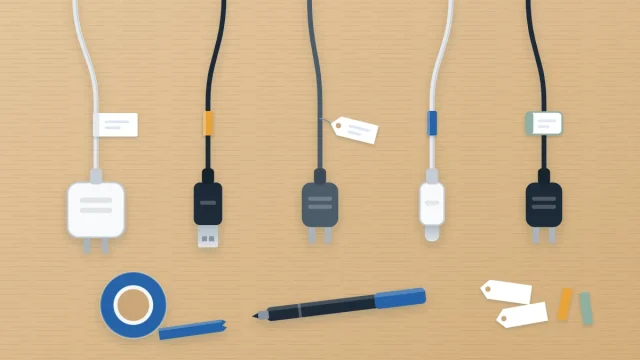
Label both ends of every cord with the name of its device. Four simple methods, what to write, how to color-code and how to keep chargers and adapters together as pairs.
A safe, step-by-step way to tidy the cords behind and under a desk: identify each one, remove extras, bundle loosely, guide the run along the desk and leave slack.
A two-day order of work for the whole room: clear, sort, measure and list on day one; place furniture, fill storage, set up paper flow, tidy cords and label on day two.
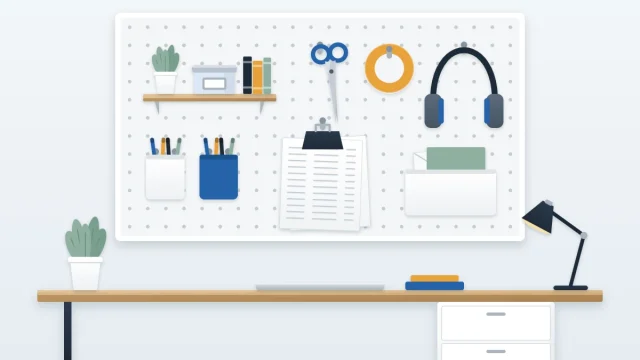
Plan a pegboard for the wall above your desk before you hang it: measure your reach, list what will live there, lay it out flat, group by task and leave gaps for change.
A small project that gives every box, folder and drawer a matching label: list what needs one, choose one method, one wording style and one position, then make them all at once.
Clear a long-standing paper backlog in short sessions: gather the piles, start with the newest, pull out obvious recycling, then sort the rest into a few broad boxes.
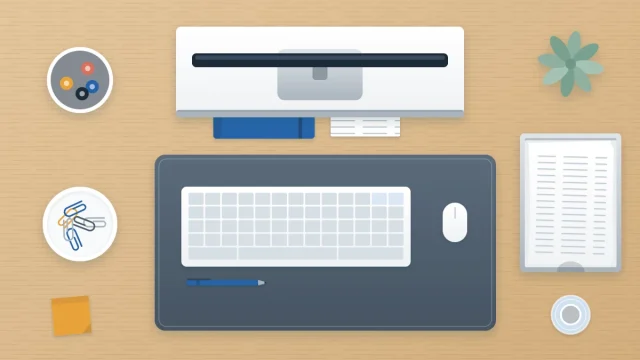
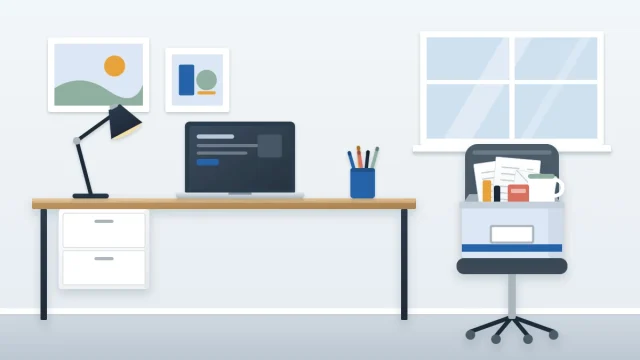
A timed sequence for a clear desk today: lift everything into one box, wipe the surface, put back only the daily essentials, then sort the box into four destinations.
Clear an office that has turned into a storage room by working through eight zones in a fixed order, with six sorting choices, a staging box and a clean way to stop.
You do not need to reorganize the whole room at once. Choose one desk drawer, one shelf or one pile of paper and follow a tutorial from start to finish. Every guide is free to read, with no sign-up needed.