Home Office Organization Mistakes: 10 Common Problems and Fixes
Ten setup flaws that make an organized office fall apart again, from buying containers too early to skipping the reset, each with its cause and a simple physical fix.
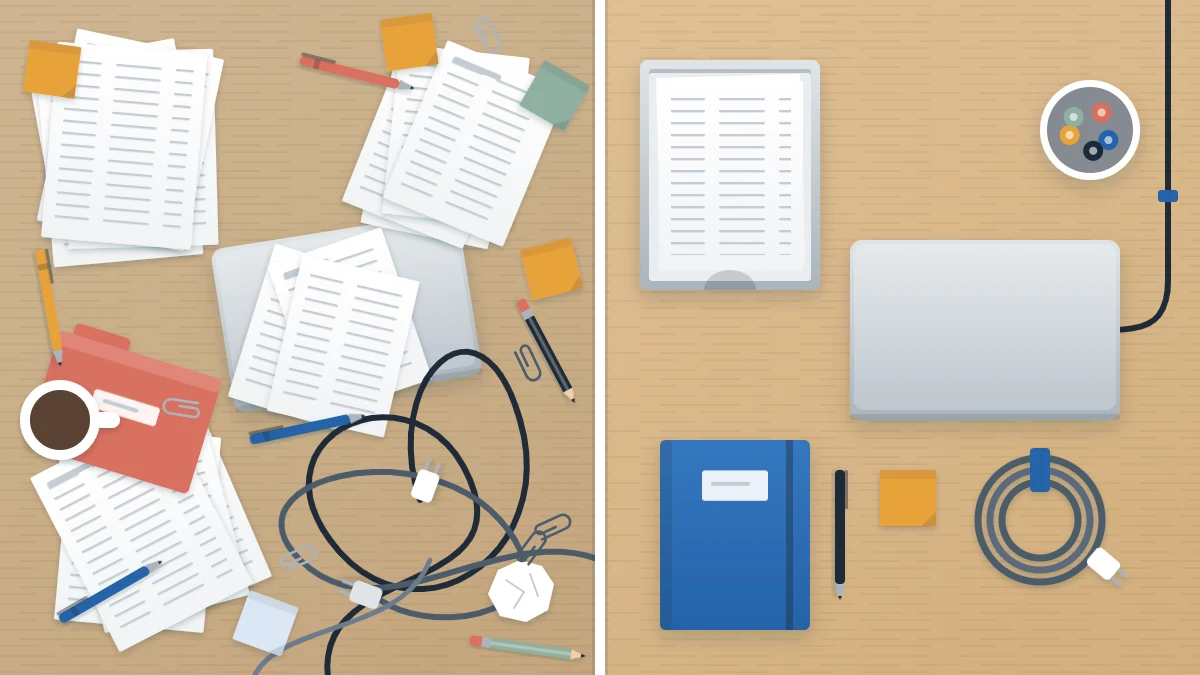
An office that was organized once and then slid back into disorder was usually not undone by laziness. It was undone by a flaw in the setup: a container that did not fit, a paper with nowhere to land, a system that took too many steps to follow on a busy day.
The ten home office organization mistakes below are the common ones. Each comes with its cause and a physical fix, so you can find the one or two that apply to your room and correct those without starting over.
Mistakes in the setup
1. Buying containers before sorting
Cause: shopping feels like progress, so the boxes arrive before you know what they will hold. They end up the wrong size, or they get filled with unsorted things simply because they are empty.
Fix: sort first, using shoeboxes and jars as stand-ins. When the groups have settled, measure the shelf or drawer and buy to fit. The order of jobs is laid out in the guide on where to start organizing a home office.
2. Building a system that is too fiddly
Cause: a filing scheme with dozens of narrow folders, or supplies split across many tiny labeled boxes, looks precise but needs a decision every time you put something away.
Fix: merge until putting an item away takes one motion and no thought. Broad categories with a little mess inside them last longer than exact ones nobody maintains.
Mistakes in where things are kept
3. Storing daily items out of reach
Cause: things were placed where there was space, not where they are used. If the stapler lives across the room, it will be left on the desk after its first use.
Fix: list what you use every working day and give those items the top drawer or the desk surface. Move rarely used things out of those spots to make room.
4. Using flat surfaces as storage
Cause: the desk, the top of the printer, the windowsill and the spare chair are all easier to reach than a drawer, so things are set down “for now” and stay.
Fix: decide which items are allowed on each surface and treat anything else as visiting. Where a surface keeps collecting the same kind of item, that item needs a home nearby: a hook for the bag, a tray for the paper.
Mistakes inside drawers and boxes
5. Overfilling drawers
Cause: a drawer hides its contents, so it absorbs extras until it jams. Then nothing can be found without stirring, and things are left out instead.
Fix: empty the drawer, remove duplicates and broken items, and refill it only until you can see every item from above. Dividers or small open boxes stop the contents from sliding back into one heap.
6. Keeping “miscellaneous” boxes
Cause: a box with a vague name accepts anything, so it fills first and gets searched most.
Fix: tip it out and sort the contents into the categories you already have. If a true group of oddments remains, give it one small container with a firm limit. When it is full, something has to leave before anything new goes in.
7. Skipping labels
Cause: you know what is in each box on the day you fill it. A month later, six matching boxes mean opening six lids.
Fix: label the front of every closed container with a plain noun, in the same position on each one. Labels also show other people in the household where things go back.
Mistakes with paper and cords
8. No landing spot for incoming paper
Cause: mail and printouts arrive daily, but nothing in the room is set up to receive them, so they settle on the nearest flat surface and become piles.
Fix: place one tray where paper enters the room and put every loose sheet in it, without exception. Empty it into its folders once a week. If piles have already built up, the guide to clearing a backlog of paper clutter shows how to work through them in short sessions.
9. Leaving cords to tangle
Cause: each device arrived with its own cord, plugged in wherever there was a free socket, and nothing was ever grouped. The result catches dust and feet and makes it hard to move anything.
Fix: unplug, take away cords that no longer serve a device, and gather the rest loosely with soft reusable ties along the back of the desk. Keep them out of walkways and away from heaters. The full method is in the guide to desk cable organization.
Safety note
Tidy only the visible length of a cord. Do not overload an outlet or power strip, and follow the manufacturer’s instructions for the strip and the devices plugged into it. Never plug one power strip into another, and keep cords out from under rugs. Replace any cord that is frayed, cracked or unusually hot. If the room needs a new outlet or any change to wiring, that is a job for a licensed electrician.
The mistake that undoes the rest
10. No regular reset
Cause: even a well-planned room drifts. A pen is left out, a sheet misses the tray, and without a moment set aside for putting things back, small drift adds up to the old mess.
Fix: attach a short tidy to something you already do, such as closing the laptop. Return tools, clear the surface, drop loose paper in the tray. A slightly longer pass once a week handles restocking and filing. The exact steps are in the ten-minute reset routine.
How to find your own weak point
You do not need to check all ten. Look at where the mess reappears first, because that location names the mistake.
- The desk surface: daily items are stored too far away, or the surface has no rule about what may stay.
- Paper piles: there is no landing tray, or the filing is too detailed to bother with.
- One overflowing drawer or box: it has no limit, or its name is too vague.
- The floor: the room holds more than its storage can take, and something needs to leave.
- Everywhere at once: the layout is probably fine and only the reset is missing.
Fix that one spot, then leave the room alone for two weeks before changing anything else. A single correction that holds tells you more than a full reorganization done in a hurry.
Frequently asked questions
Why does a home office get messy again so quickly?
Usually because of one flaw in the setup, not the whole system. The most common are daily items stored too far from the desk, no tray for incoming paper, and no short tidy at the end of the day. Look at where the mess returns first and correct that spot.
Is it a mistake to buy matching storage boxes?
Matching boxes are fine once you know what they will hold. The mistake is buying them first. Sort your items into groups, measure the shelf or drawer where each group will live, then choose containers that fit, and label every box so identical fronts are easy to tell apart.
How detailed should a home office system be?
Only as detailed as you will keep up on a tired day. If putting something away takes more than one motion or requires a decision between several similar folders or boxes, merge them into broader categories. A simple arrangement that gets used beats a precise one that is skipped.